Buy Ceylon Cinnamon Wholesale

Premium Spice. Maximum Margins.

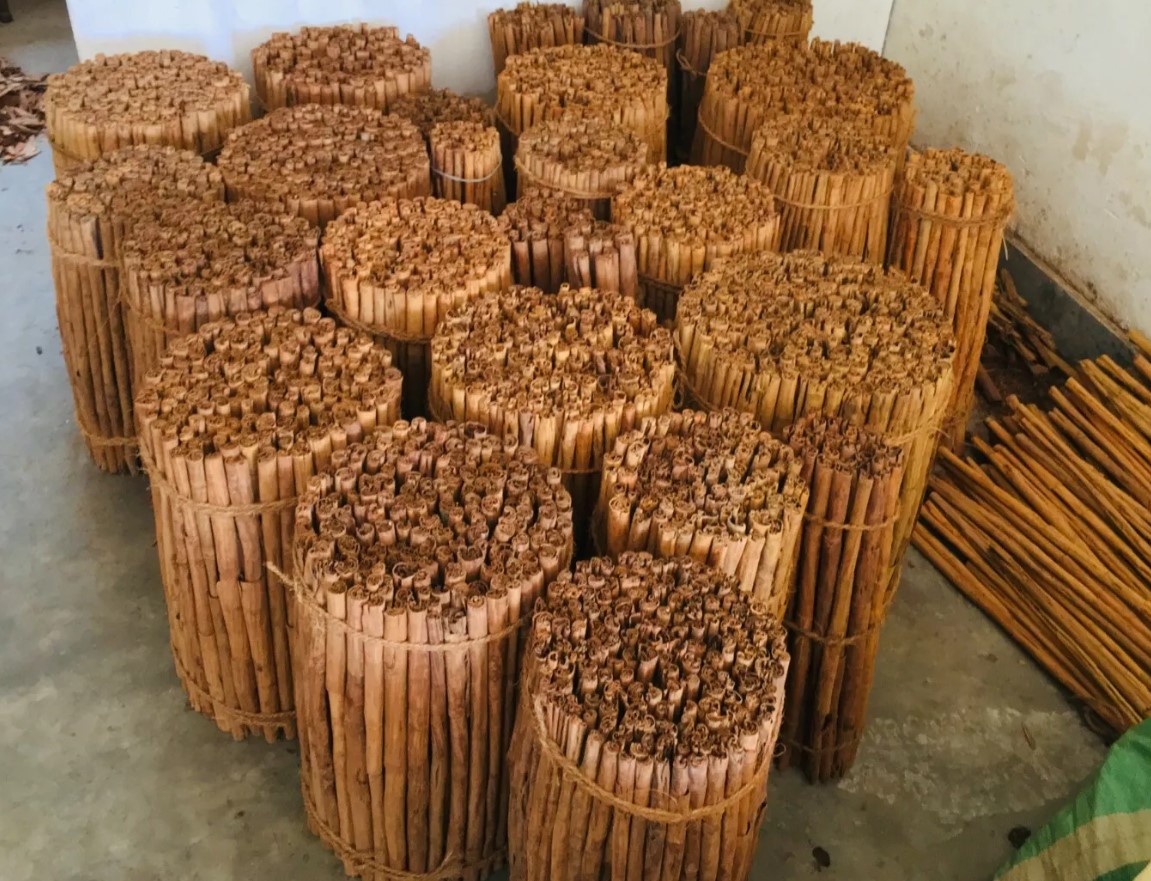
Bulk Ceylon Cinnamon Sticks (Wholesale & Food Service) | Direct from Sri Lanka

Stop overpaying for stale, middleman-marked-up spices. At Ceylon Cinnamon X, we supply Bulk Ceylon Cinnamon Sticks directly from the artisan gardens of Sri Lanka to your doorstep.

Whether you are a bakery needing aromatic C5 quills or a gourmet retailer packaging premium Alba sticks, our bulk program guarantees the freshest harvest at unbeatable export prices. 100% Pure. 0% Cassia. Non-GMO.

Looking for genuine organic Ceylon cinnamon for your bulk needs? We provide ethically sourced, high-quality cinnamon with its characteristic mild and sweet flavor. Ideal for food service, ingredient suppliers, and more. Get a quote for your wholesale order now.

Contact us for wholesale Pricing | Product White label Contracts  :
(Kasun)  +65 98214001 , +94 716393612, info@ceyloncinnamonx.com

Choose Your Grade

Ceylon Cinnamon Product Specifications

KNS Ceylon Organic guaranteed Best organic Ceylon cinnamon powder characterized by its authenticated Cinnamomum verum origin Sri Lanka , rigorous organic certification, extremely low coumarin content, strict adherence to physical, chemical, and microbiological purity standards, superior sensory qualities, and responsible processing and packaging.

1. Botanical Identity and Origin:
  • Botanical Name: Cinnamomum verum (syn. Cinnamomum zeylanicum). This is crucial to distinguish it from Cassia cinnamon species (Cinnamomum cassia, C. aromaticum, etc.).
  • Origin: Primarily Sri Lanka (formerly Ceylon). While other regions may produce “true cinnamon,” Sri Lankan Ceylon cinnamon is highly regarded for its quality and traditional cultivation methods.
2. Organic Certification:
  • Standards: Must be certified organic by recognized bodies like USDA Organic, EU Organic, or NPOP (India), ensuring no synthetic pesticides, fertilizers, or genetically modified organisms (GMOs) are used during cultivation and processing.
  • Traceability: The best products offer full traceability from farm to finished product, often working with smallholder farmers and adhering to fair trade practices.
3. Processing and Form:
  • Source Material: Made from the inner bark of the Ceylon cinnamon tree. The highest quality powder typically comes from “quills” or “quillings” (rolled bark pieces), particularly higher grades like H1 or Alba. Lower grades may use “featherings” or “chips” which can include some outer bark.
  • Method: Traditionally, the bark is carefully hand-harvested, sun-dried, and then ground into a fine powder. “Steam treated” is a common and preferred heat treatment method for microbial control without chemical fumigation.
  • Particle Size: Fine, free-flowing powder, often specified as 90% minimum passing through a 80-mesh or even 100-mesh screen. Consistency in particle size is important for even dispersion and flavor release.
4. Key Chemical and Physical Specifications (from Certificates of Analysis – COA):
  • Coumarin Content: This is a paramount indicator of quality and safety for Ceylon cinnamon. The best organic Ceylon cinnamon powder will have very low coumarin levels, typically , ideally . Cassia cinnamon contains significantly higher levels (0.4-0.8% or more), which can be hepatotoxic in large quantities.
  • Volatile Oil Content: While less volatile than sticks, good quality powder should retain a characteristic volatile oil content, usually in the range of to on a dry basis. This contributes to its aroma and flavor.
  • Moisture Content: Max. to (m/m). Lower moisture content helps prevent microbial growth and preserves shelf life.
  • Total Ash Content: Max. to (m/m) on a dry basis. Indicates mineral content and the presence of foreign matter.
  • Acid Insoluble Ash: Max. (m/m) on a dry basis. A low value indicates minimal soil or sand contamination.
  • SO2 Content: Negative/Absent. Sulfur dioxide is sometimes used as a preservative but should not be present in organic products.
  • Heavy Metals: Strict limits for lead (e.g., max ppm), cadmium (e.g., max ppm), arsenic (e.g., max ppm), and mercury (e.g., max ppm) are essential for safety.
  • Pesticide Residues: Must meet organic standards (e.g., USDA NOP standards), ideally being completely free from pesticide residues.
  • Aflatoxins: Must be absent or below detectable limits.
5. Microbiological Profile:
  • Total Plate Count (TPC): Max. cfu/g (Colony Forming Units per gram), some specifications even lower (e.g., cfu/g).
  • Yeast and Mold Count: Max. cfu/g to cfu/g.
  • Coliforms: Max. cfu/g.
  • E. coli: Max. cfu/g or Absent.
  • Salmonella: Absent in g or Negative.
  • Staphylococcus aureus: Max. cfu/g or Absent.
6. Sensory Attributes:
  • Appearance: Yellow to reddish-brown, fine powder.
  • Aroma: Fresh, characteristic, aromatic, mild, sweet, woody, free from off-notes or mustiness.
  • Flavor: Mildly sweet, delicate, characteristic, woody, free from foreign flavors or bitterness.
7. Purity and Additives:
  • Ingredients: Single ingredient, pure Cinnamomum verum (Ceylon cinnamon).
  • Adulteration: Free from adulteration (e.g., mixing with Cassia cinnamon or other fillers).
  • Additives: Free from any additives, preservatives, artificial flavors, or colors.
  • Foreign Matter: Absence of hazardous materials like excreta, glass, metal, stones, hard plastic, wood splinters, and other extraneous matter.
  • Infestation: Free from live or dead insects, insect fragments, and rodent contamination visible to the naked eye.
  • Irradiation: Should be free from irradiation.
8. Packaging and Storage:
  • Packaging: Food-grade, airtight, resealable packaging (e.g., multi-layer craft pouches, PE bags inside corrugated cartons, or jars) to preserve flavor, aroma, and prevent moisture absorption.
  • Shelf Life: Typically 24 months when stored properly in a cool, dry, dark place, away from moisture and direct sunlight.
9. Certifications:
  • Organic Certification: As mentioned above (USDA Organic, EU Organic, NPOP, Control Union, etc.).
  • Kosher/Halal: Often available for wider market appeal.
  • GMP (Good Manufacturing Practices) & HACCP (Hazard Analysis and Critical Control Points): Indicates that the product is processed under hygienic and controlled conditions.
  • Gluten-Free, Non-GMO, Allergen-Free: Often tested and certified to ensure the absence of common allergens and GMOs.

    Ceylon Cinnamon Wholesale Price | Free Quote
    Please fill this form and submit. We'll get back to you as soon as possible!

    The Pure Ceylon Cinnamon Certification

    Is a testament to the authenticity and quality of Ceylon cinnamon. Issued by the Sri Lanka Export Development Board (EDB), this certification guarantees that the product is 100% pure Ceylon cinnamon, sourced and processed within Sri Lanka.
    More

    ISO 22000

    ISO 22000 is an internationally recognized standard that combines the ISO9001 approach to food safety management and HACCP for the assurance of food safety at all levels. The standard maps out how an organization can demonstrate its ability to control safety hazards to ensure that food is safe.
    More

    USDA Organic

    The United States Department of Agriculture’s certification program ensures that products adhere to strict national organic standards.
    More

    JAS Organic

    Japan Agricultural Standard certification is known for its rigorous protocols and emphasis on traceability.
    More

    EU Organic

    The European Union’s organic certification is comprehensive, covering production, processing, and labeling regulations.
    More

    Control Union Certification

    Control Union certification is awarded by the Institute Control Union based in the Netherlands. It is an internationally recognized inspection and certification body. They perform in many industries such as Organic agriculture, Sustainability, Social compliance, Textiles, Quality management systems, etc.
    More